Gym vs Home Workouts: How to Choose a Plan You Can Keep
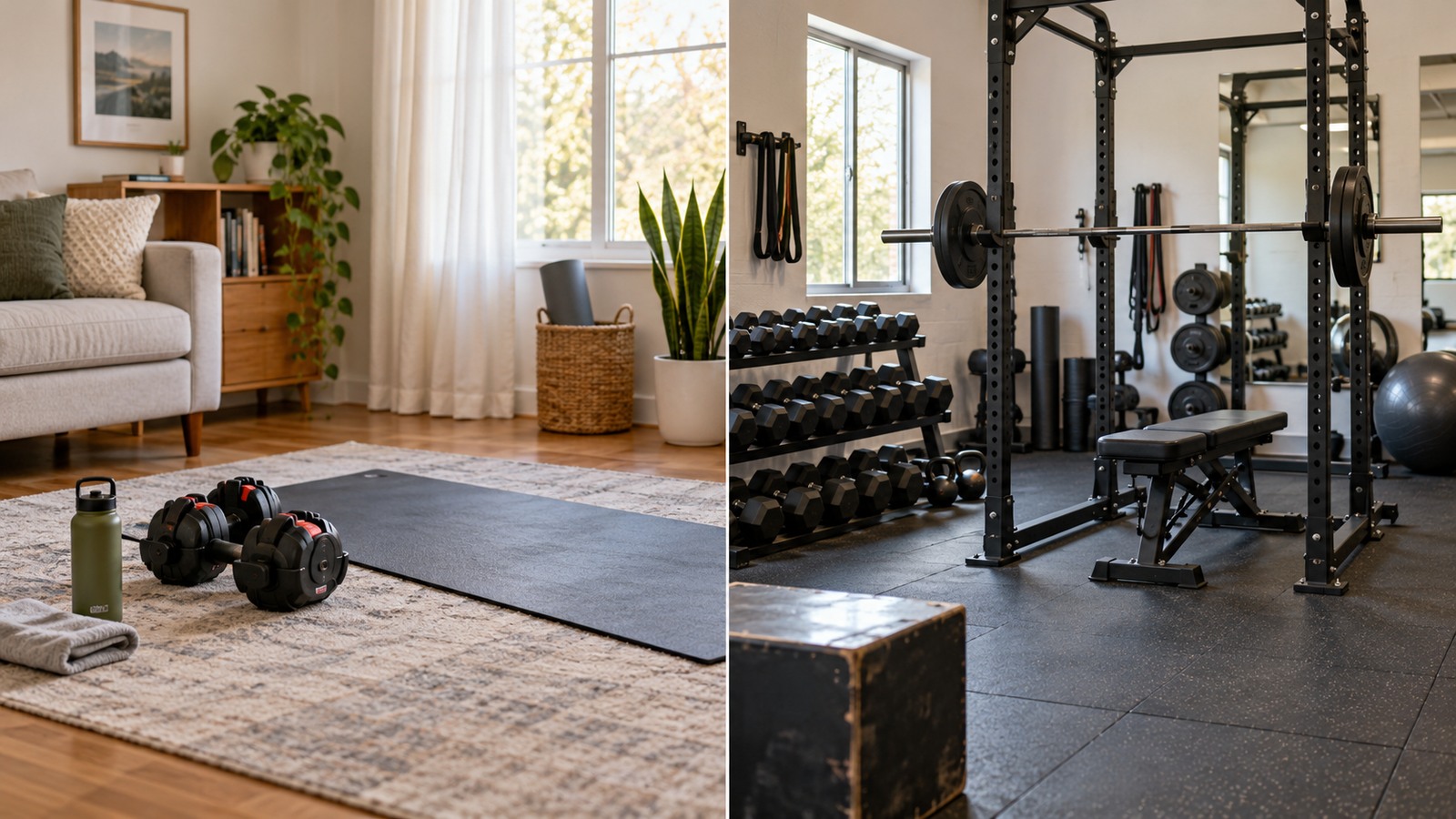
Choose home workouts when travel, cost, or privacy would stop you training. Choose a gym when you need equipment, heavier resistance, or an environment that helps you show up. Either setting can support regular exercise. The useful comparison is whether you can complete and progress your planned sessions in that setting, rather than whether one location is universally better.
ACSM's 2026 resistance-training summary recognizes home-based training, bodyweight exercise, and elastic bands as effective options for healthy adults. That supports home training as an option; it does not establish that every home routine matches every gym program.
Compare the constraints before choosing
- Available time: At home, setup may take only a few minutes. For a gym session, include both journeys, changing, and any waiting for equipment.
- Progression: A gym usually offers more ways to increase external resistance. At home, you may need harder exercise variations or additional equipment as movements become easy.
- Space and distractions: A home session needs a clear, stable area and time you can protect. A gym separates training from home tasks, but opening hours and crowding may limit you.
- Help with technique: Equipment access alone does not provide coaching. At either location, arrange qualified instruction if you need someone to teach or observe a movement.
- Cost: Compare the actual membership, travel, and equipment costs available to you. A bodyweight starting routine can avoid a membership; a well-equipped home gym may require a substantial purchase.
A weekly time-budget example
Suppose you have two 45-minute windows each week. A 15-minute journey each way leaves about 15 minutes at the gym before allowing for changing or waiting. A home routine could use more of the same window for training. If the gym is next to work and travel adds little time, that trade-off changes. This is an illustrative time calculation, not a comparison trial or a claim about calories burned.
Write down your real door-to-door session time and a backup option for a busy day. Someone who likes the gym can still use a short home session when travel is impractical. You do not need to commit to one setting forever.
Is a gym better for building muscle?
Access to adjustable loads, machines, and pulling equipment can make a gym convenient for progressive resistance training. At home, bodyweight movements and bands can also provide resistance, but your available setup places practical limits on which movements you can load. A floor push-up may be challenging enough; training your back progressively without any equipment is more difficult.
Before buying equipment, check whether your routine includes a leg movement, push, hip movement, and a suitably loaded pull. Avoid improvised door or furniture anchors. For equipment-free options and their limits, see building muscle at home without equipment.
Is home or gym training better for weight loss?
The location alone does not determine weight change. NIDDK explains that a sustainable eating plan and physical activity both matter for weight management. Choose a setting that makes activity practical, and avoid judging a routine by a promise of rapid weight loss.
Walking outside can complement strength sessions in either setting. General adult guidance includes aerobic activity and muscle strengthening; it is a longer-term health target you can build toward, rather than a requirement to begin with long daily workouts. See CDC's adult activity examples.
Try a practical two-week comparison
- Choose a realistic number of sessions and book specific times.
- Try the setting you currently prefer. Record the sessions completed, total time used, exercises, and practical barriers.
- If the main barrier is travel or access, try a home alternative. If it is space, equipment, or distractions, consider whether a gym solves that particular problem.
- Keep the setting that makes the next month workable. Do not judge muscle growth from a two-week comparison; use it to assess convenience and attendance.
Frequently asked questions
Can I start at home and join a gym later?
Yes. Begin with movements you can perform confidently, then reconsider your setup when the available variations or resistance limit progress.
Can I mix home and gym workouts?
Yes. Plan them as one weekly routine, accounting for repeated movements and recovery, rather than adding a second full routine on top of the first.
Where should a complete beginner start?
Choose the setting that is accessible and lets you learn manageable exercises. If you need technique instruction, arrange it separately. Our beginner home routines show simple starting examples.