Intermittent Fasting 18/6 Schedule Calculator: Your Advanced Guide to the 18:6 Protocol
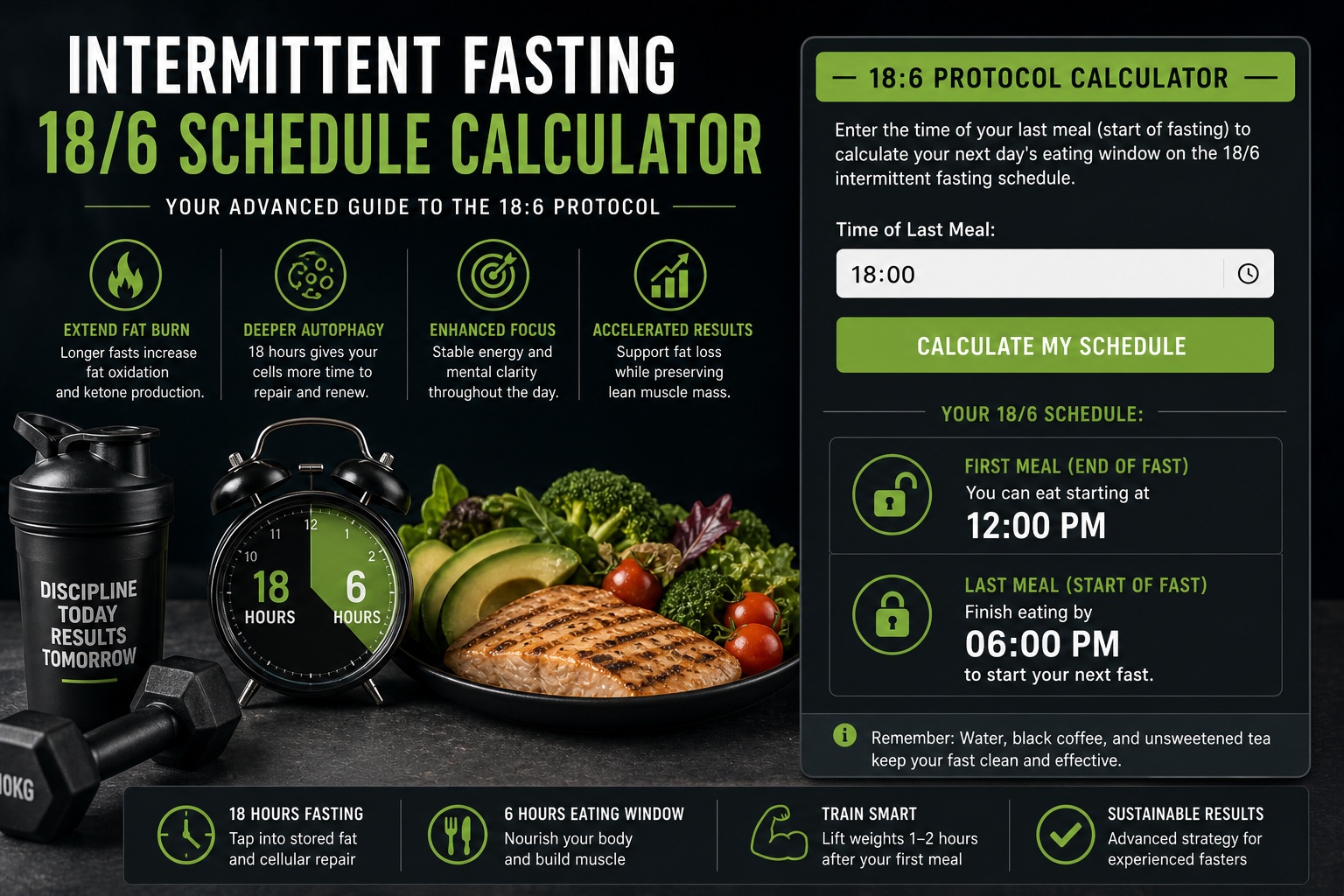
For many fitness enthusiasts, the journey into time-restricted feeding starts with the popular 16/8 method. However, as your body adapts and your metabolic flexibility improves, transitioning to the 18/6 intermittent fasting protocol can unlock deeper physiological benefits. This advanced schedule involves an 18-hour fasting window followed by a concentrated 6-hour eating window, pushing the body further into the state of fat oxidation and cellular repair.
The core of this protocol’s success lies in the "metabolic switch". By extending the fast to 18 hours, you significantly deplete liver glycogen stores, forcing the metabolism to transition from glucose to fatty acids and ketone bodies as the primary energy source. This shift is not just about weight loss; it’s about optimizing your internal biochemistry for longevity and performance.
To implement this advanced regimen successfully, precision is key. Your eating window must be perfectly aligned with your circadian rhythms and training intensity to prevent metabolic stress. Use our specialized Intermittent Fasting 18/6 Schedule Calculator below to determine your ideal start and end times based on your lifestyle and local time zone.
18:6 Protocol Calculator
Enter the time of your last meal (start of fasting) to calculate your next day's eating window on the 18/6 intermittent fasting schedule.
The Power of Enhanced Autophagy and mTOR Inhibition
One of the most significant advantages of the 18/6 protocol over shorter fasting periods is the increased induction of autophagy. Autophagy is an evolutionarily conserved process where the body cleans out dysfunctional cellular components. On a molecular level, the prolonged absence of nutrients increases the AMP-to-ATP ratio, activating the AMPK enzyme—the body's master energy sensor.
Activation of AMPK directly inhibits the "mammalian target of rapamycin" (mTOR) pathway[cite: 26]. While mTOR is essential for muscle growth in the presence of nutrients, its temporary inhibition during an 18-hour fast allows for superior cellular detoxification, reduced systemic inflammation, and improved markers of aging. This makes the 18/6 window a potent tool for those seeking not just a better physique, but improved long-term health.
Managing Protein Pacing in a 6-Hour Window
A common challenge with the 18/6 protocol is consuming adequate nutrients within a shorter timeframe. For those engaged in resistance training, maintaining muscle mass is a priority. Research suggests that a daily protein intake of 1.6 to 2.2 grams per kilogram of body weight is necessary for muscle preservation.
To maximize muscle protein synthesis within a 6-hour window, you should utilize "Protein Pacing." Instead of one massive meal, divide your protein intake into 2-3 high-quality servings of 25-50 grams each. This ensures a steady supply of leucine and other essential amino acids to your muscles, preventing the catabolic effects that can sometimes occur during prolonged fasting.
Essential Support: Hydration and Electrolytes
During an 18-hour fast, your insulin levels drop significantly, which leads to the kidneys excreting higher amounts of sodium and water. This can lead to symptoms often mistaken for hunger, such as headaches, weakness, or irritability. To maintain your energy levels and stay in the fast, it is critical to use sugar-free electrolyte support containing sodium, potassium, and magnesium.
Remember that "clean" fasting is the most effective way to trigger deep autophagy. Stick to water, black coffee, or tea without additives. Avoid BCAAs during the fasting window, as they can trigger an insulin response and shut down the autophagy process. If you find the hunger waves challenging, a small amount of diluted apple cider vinegar can help modulate acidity and reduce cravings without breaking your fast.
Is 18/6 Right for You?
The 18/6 schedule is a powerful middle ground between standard time-restricted feeding and more extreme protocols like OMAD (One Meal A Day). It offers a deeper metabolic "reset" than 16/8 while still providing a sufficient window to meet your caloric and micronutrient needs. However, if you find that 18 hours is still not giving you the results you desire, you may eventually consider even more advanced options like the 20/4 protocol or a full 24-hour "Eat-Stop-Eat" cycle once or twice a week.