The No-Nonsense Guide to Intermittent Fasting: How to Actually Make It Work for Your Body
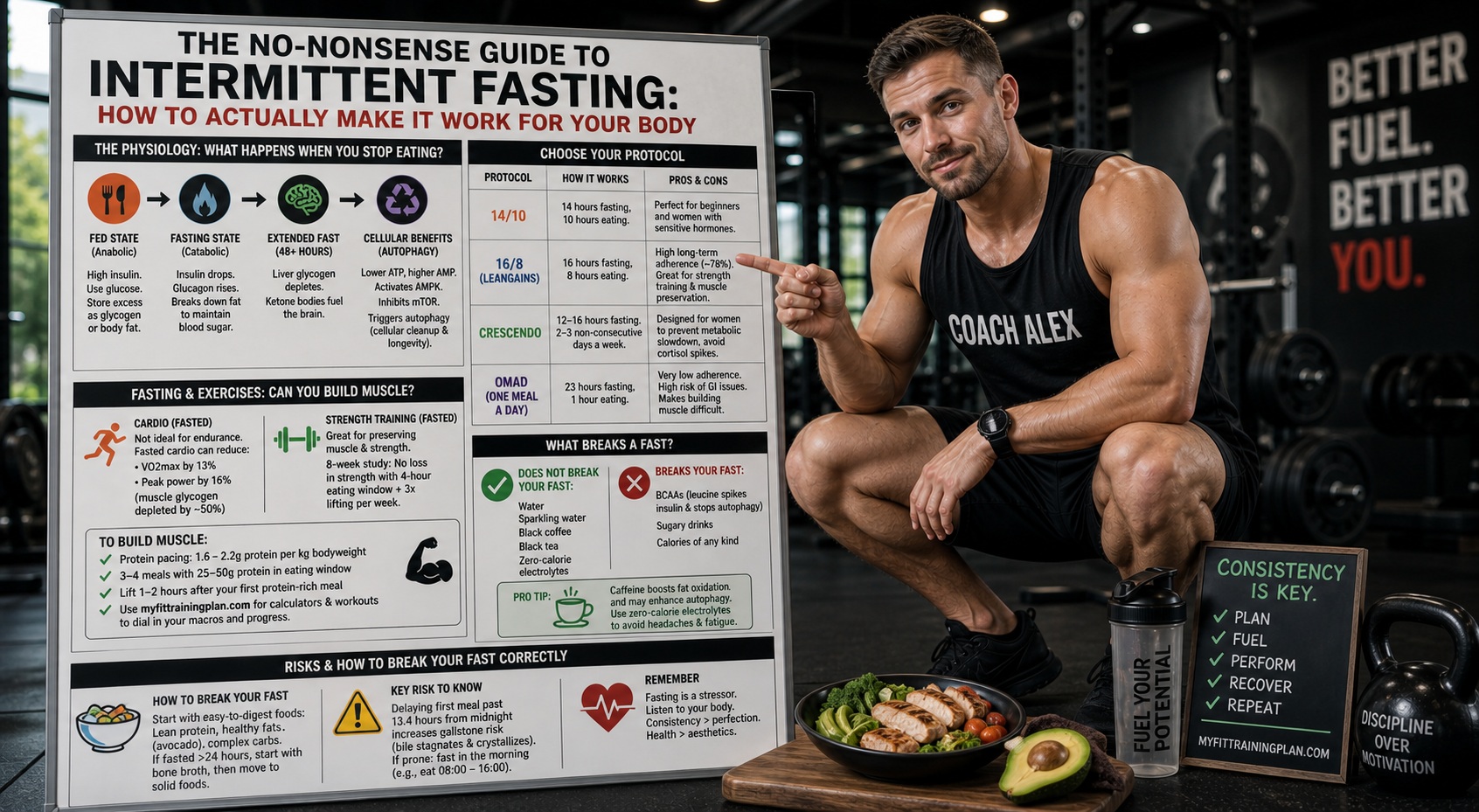
Hey team! We need to talk about a paradigm shift in fitness and nutrition. For decades, the focus has been strictly on cutting calories, but the modern approach is shifting toward temporal eating patterns. With non-communicable diseases like heart disease and diabetes causing 71% of global deaths, fixing our metabolic health is non-negotiable.
Intermittent fasting isn't just about skipping breakfast; it is a calculated bio-hack that improves metabolic flexibility, protects your brain, and promotes longevity. Let's cut through the noise and break down the physiological facts.
The Physiology: What Happens When You Stop Eating?
To succeed with intermittent fasting, you need to understand the concept of "metabolic switching". When you eat, your body is in an anabolic state, using glucose for energy and storing the excess as glycogen in the liver and muscles, or as triglycerides in fat.
As you fast, insulin drops and counter-regulatory hormones like glucagon and catecholamines rise. This triggers the breakdown of stored fat to maintain blood sugar. Liver glycogen depletes after about 48 hours of fasting, forcing the body into gluconeogenesis and the production of ketone bodies, which serve as highly efficient fuel for the brain.
The real magic happens at the cellular level with a process called autophagy. Fasting lowers ATP and raises AMP, activating AMPK (your cellular energy sensor). This inhibits mTOR, a pathway that normally drives growth when nutrients are present. Inhibiting mTOR triggers autophagy, a biological cleanup process that clears out toxic proteins and delays cellular aging.
Choosing Your Intermittent Fasting Workout Schedule and Protocol
You can't just blindly copy someone else's routine; your intermittent fasting workout schedule needs to match your life. Whether you are looking at 16/8 or 18/6 or 20/4, the best protocol is the one you can stick to consistently.
| Protocol | How It Works | Pros & Cons |
|---|---|---|
| 14/10 | 14 hours fasting, 10 hours eating. | Perfect for beginners and women whose endocrine systems are sensitive to energy deficits. |
| 16/8 (Leangains) | 16 hours fasting, 8 hours eating. | High long-term adherence (about 78%); excellent for combining with strength training to preserve muscle. |
| Crescendo | 12-16 hours fasting, 2-3 non-consecutive days a week. | Designed specifically for women to prevent metabolic slowdown, avoid cortisol spikes, and protect hormonal health. |
| OMAD (One Meal a Day) | 23 hours fasting, 1 hour eating. | Extremely low long-term adherence; carries a high risk of gastrointestinal discomfort and makes building muscle very difficult. |
Fasting and Exercises: Can You Build Muscle?
When it comes to fasting and exercises, we have to separate cardio from lifting. Training in a deeply fasted state is terrible for endurance. Studies show that fasted cardio can reduce peak oxygen uptake (VO2max) by 13% and peak power output by 16% because muscle glycogen is depleted by half
However, strength training is a different story. Combining intermittent fasting with heavy lifting effectively maintains lean muscle while stripping fat. An 8-week study on subjects eating all their calories in a 4-hour window while lifting 3 days a week showed no loss in strength compared to a normal diet.
To actually grow muscle, you must implement "Protein Pacing". You need 1.6 to 2.2 grams of protein per kilogram of body weight, broken down into 3-4 meals containing 25-50 grams of protein during your eating window. Furthermore, don't train heavy while deeply fasted; aim to lift 1-2 hours after your first protein-rich meal. To dial in those macros perfectly during your eating window, I highly recommend using the calculators and workout plans on myfittrainingplan.com to take the guesswork out of your progression.
Fasting as Part of Life: What Breaks a Fast?
If you want to integrate fasting as part of life, you have to manage hunger without breaking the physiological fast. Strict fasting means only water, unsweetened mineral water, black tea, and black coffee. Caffeine is actually beneficial because it stimulates fatty acid oxidation and can enhance autophagy.
Avoid the trap of sipping BCAAs during your fast. BCAAs (especially leucine) trigger a pronounced insulin response that immediately shuts down cellular autophagy. Instead of BCAAs, use zero-calorie electrolytes (sodium, potassium, magnesium) to prevent the headaches and weakness caused by the rapid excretion of sodium that happens when insulin drops.
Risks and How to Break Your Fast Correctly
How you open your eating window is just as critical as the fast itself. After 16-24 hours, hitting your stomach with heavy fats or simple sugars will cause a massive insulin spike and gastrointestinal distress. Break your fast with easily digestible foods: lean protein, healthy fats like avocado, and complex carbohydrates. If you fasted for over 24 hours, start with bone broth to restore the intestinal lining before moving to solid foods.
Finally, respect the clinical risks. Fasting is a physical stressor. Delaying your first meal of the day past 13.4 hours from midnight dramatically increases the risk of gallstones because gallbladder motility drops, causing bile to stagnate and crystallize. If you are prone to gallstones, shift your fasting window to the morning (e.g., eat from 08:00 to 16:00).