How to Crush Your Fasted Workouts Without Passing Out
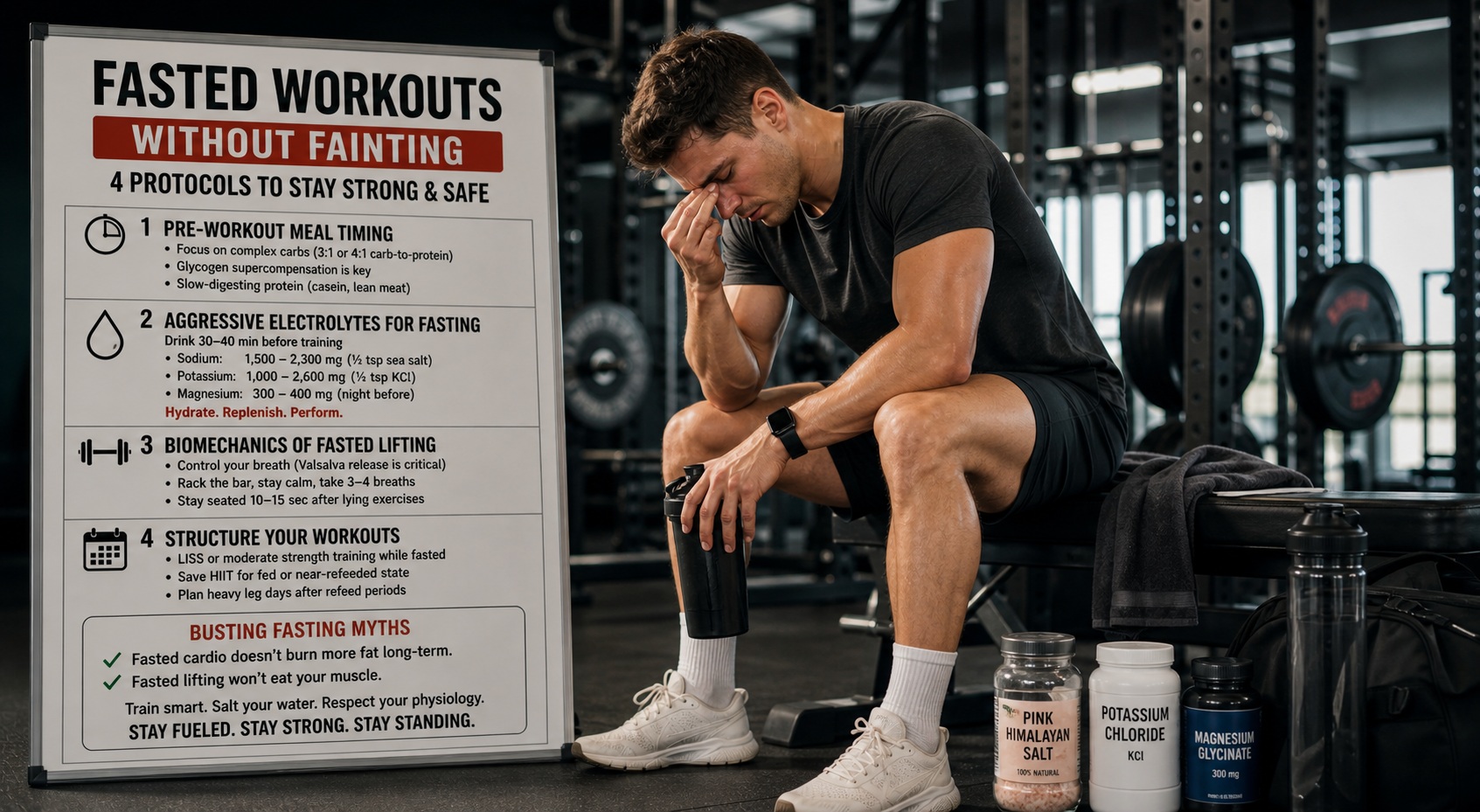
If you are reading this, you have probably experienced that terrifying moment on the gym floor: the barbell goes back on the rack, your vision narrows, your ears ring, and suddenly the ground feels like it is rushing up to meet you. You are not alone. As intermittent fasting continues to dominate the fitness landscape, the phenomenon of gym syncope (fainting) is becoming dangerously common. But working out fasted without feeling dizzy is entirely possible when you stop relying on bro-science and start manipulating your physiology.
Fainting during a workout is rarely just a simple blood sugar drop during exercise. It is a perfect storm of three physiological failures: severe hypovolemia (low blood volume from dehydration), autonomic nervous system mismatch (a hyperactive vagal response), and substrate depletion in the brain. When you fast, your insulin drops, which signals your kidneys to excrete massive amounts of sodium. This "fasting natriuresis" pulls water out of your bloodstream, tanking your blood pressure before you even pick up a weight. Let's break down the exact protocols to bulletproof your training.
Protocol 1: Mastering Pre-Workout Meal Timing
Your fasted workout does not start when you wake up; it starts the night before. The biggest mistake you can make is ending your feeding window with a low-carb, high-fat meal. Pre-workout meal timing is critical here. Your goal is to achieve glycogen supercompensation before the fast begins. I recommend a 3:1 or 4:1 carbohydrate-to-protein ratio for your final meal.
Focus on low-glycemic, complex carbohydrates like lentils, quinoa, or whole-grain pasta. These foods delay gastric emptying and provide a slow, steady release of glucose into the bloodstream, guarding against a severe blood sugar drop during exercise the following morning. Pair this with a slow-digesting protein like casein or lean red meat to ensure a steady trickle of amino acids to your liver, fueling gluconeogenesis while you sleep.
Protocol 2: Aggressive Electrolytes for Fasting
Drinking plain distilled or tap water before a fasted session is a recipe for a blackout. You need to aggressively restore your blood plasma volume using specific electrolytes for fasting. When you are entirely depleted of food-derived minerals, you must supplement to keep your heart's stroke volume stable.
Here is your non-negotiable pre-workout hydration matrix to consume 30 to 40 minutes before hitting the gym:
- Sodium (1,500 - 2,300 mg daily): Sodium is the absolute foundation for blood volume. Consume 1/2 teaspoon of pink Himalayan or sea salt mixed into 20-24 ounces of water before you train.
- Potassium (1,000 - 2,600 mg daily): Essential for cellular membrane potential and heart contractility. Add 1/4 teaspoon of potassium chloride to your pre-workout water.
- Magnesium (300 - 400 mg daily): Crucial for ATP synthesis and preventing cramps. Take a magnesium glycinate capsule the night before, as mixing it into your pre-workout drink can cause gastrointestinal distress.
Protocol 3: Biomechanics of Fasted Weightlifting
If you are engaging in heavy fasted weightlifting, you must understand how the Valsalva maneuver affects your blood pressure. Holding your breath and bracing your core is necessary to protect your spine during heavy squats or deadlifts. However, the danger lies in Phase 3 of the maneuver: the release. When you finish the rep and suddenly release your breath, your intrathoracic pressure drops rapidly, causing a massive, temporary reduction in cardiac output and blood flow to the brain.
To mitigate this, do not abruptly rack the weight and walk away. Rack the bar, keep your hands on it, keep your head level, and take 3-4 controlled, shallow breaths before stepping back. If your exercise requires you to lie down (like bench presses or core work), remain seated for at least 10 to 15 seconds before fully standing up to allow your baroreceptors to adjust your vascular resistance.
Protocol 4: Structuring Your Intermittent Fasting Workout Schedule
Not all workouts belong in the deep fasting window. High-Intensity Interval Training (HIIT) triggers a massive catecholamine (adrenaline) release that rapidly drains your remaining liver glycogen, putting you at a much higher risk for dizziness. Your intermittent fasting workout schedule should prioritize low-intensity steady-state cardio (LISS) or moderate-volume strength training during the fasted state.
If you want to completely optimize how your training volume aligns with your feeding windows, I highly recommend using the macro calculators and structured workout plans available right here on myfittrainingplan.com. We can help you strategically place your heavy leg days immediately following your refeed periods to ensure you have the energy to perform safely.
Busting Fasting Myths: Fat Loss and Muscle Catabolism
Finally, let's clear up the pervasive myths driving people to blindly push through dizzy spells. First, fasted cardio does not inherently burn more body fat long-term. While fat oxidation is higher during the actual fasted session, recent meta-analyses confirm there is no significant difference in total fat mass lost between fed and fasted training when daily calories are equated. Your body simply adapts by burning more carbohydrates later in the day.
Second, fasted resistance training will not instantly eat your muscles. Research demonstrates that training performed in fasted versus fed states has similar effects on body composition and muscle hypertrophy over a 12-week period, provided your total daily protein intake is adequate. During a fast, your body pulses growth hormone, which actively inhibits muscle protein breakdown to preserve lean tissue.
Train smart, salt your water, respect your physiology, and you will never have to scrape yourself off the gym floor again.