14/10 Intermittent Fasting Schedule Calculator & Complete Protocol Guide
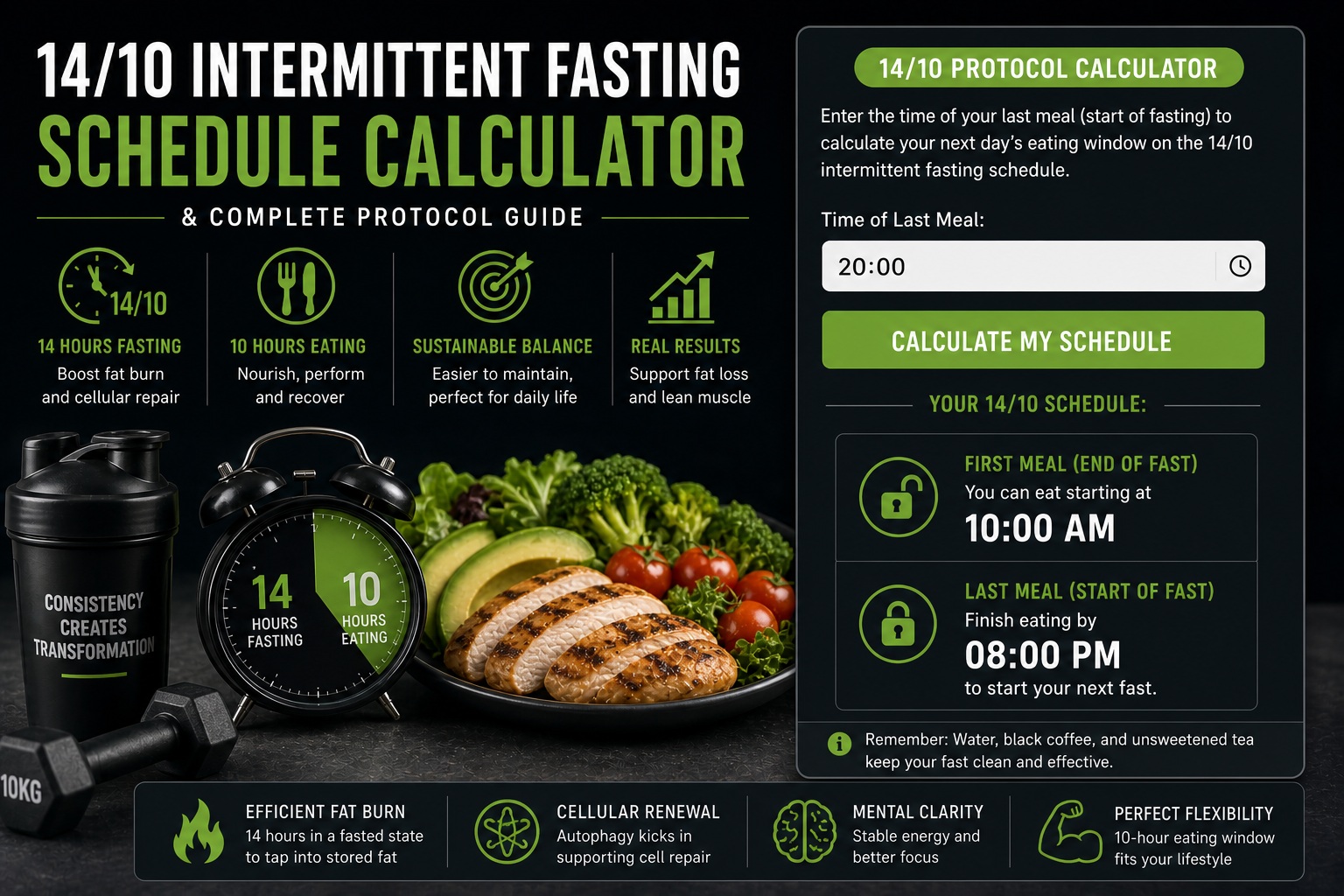
The modern paradigm of nutrition and fitness is undergoing a significant shift, moving away from strictly counting calories to focusing on temporal eating patterns. Intermittent fasting (IF) is structured around alternating periods of voluntary fasting and eating windows. While many dive straight into extreme fasts, the 14/10 protocol—which consists of 14 hours of fasting and a 10-hour window for eating—stands out as a highly effective, sustainable starting point.
Unlike traditional diets that constantly restrict your energy intake, the 14/10 schedule triggers unique cellular adaptations. To help you seamlessly integrate this protocol into your daily routine—no matter your local time zone or daily schedule—we have developed a comprehensive 14/10 Intermittent Fasting Schedule Calculator.
14:10 Protocol Calculator
Enter the time of your last meal (start of fasting) to calculate your next day's eating window on the 14/10 intermittent fasting schedule.
Why the 14/10 Protocol is the Ultimate Starting Point
For most individuals, attempting to blindly copy a strict fasting schedule often leads to metabolic stress and failure. The 14/10 protocol is universally recognized as an optimal entry point. This mild form of time-restricted feeding (TRF) provides a gentle transition, allowing the enzymatic systems of your digestive tract and your entire endocrine system to adapt to new eating patterns safely.
Perfect for Hormone Health and Women
The 14/10 approach is an ideal starting protocol for beginners and particularly for women. The female body features a highly sensitive endocrine system, regulated primarily by the hypothalamus, which acts as a strict sensor for energy deficits.
When subjected to aggressive daily fasting, the body can perceive the energy restriction as a threat to survival, triggering a protective stress response. This can result in a massive release of cortisol, which may actually stimulate abdominal fat storage and decrease insulin sensitivity. By utilizing the 14/10 protocol, you allow your body to adapt safely without inducing these stressful cortisol spikes.
Physiological Benefits During the 14-Hour Fast
Even with a relatively short 14-hour fasting window, your body undergoes a process called "metabolic switching". Here is what happens during your fasting phase:
- Insulin Reduction: As you spend more time without food, circulating insulin levels drop while counter-regulatory hormones like glucagon increase.
- Fat Oxidation: This hormonal shift initiates the breakdown of lipids (fats) to maintain blood glucose homeostasis.
- Digestive Rest: The fasting period provides your gastrointestinal tract with essential "rest" time, which is necessary for restoring the mucosal barrier and suppressing systemic inflammation.
Leveling Up: Moving to 16/8 and 18/6 Fasting Protocols
The 14/10 protocol is an incredibly sustainable lifestyle choice and a vital stepping stone. However, as your body becomes accustomed to this schedule, your metabolic flexibility will increase. Once fully adapted, you can gradually narrow your eating window to 8 hours to step up to the classic 16/8 protocol.
Advanced protocols like 16/8 or 18/6 provide deeper metabolic benefits, including a more profound induction of autophagy—the body's process of clearing out dysfunctional cellular components—and faster depletion of liver glycogen to accelerate fat burning.
If you have mastered the 14/10 schedule and are ready to maximize your body recomposition, be sure to check out our advanced guides and utilize our dedicated 16/8 and 18/6 Intermittent Fasting Calculators to find your next optimal routine.